
- Home Page
- Company Profile
-
Our Products
- Moisture Separator
- Flanged Moisture Separator
- Threaded Moisture Separator
- Compressed Air Moisture Separator
- Compressor Moisture Separator
- Automatic Combo Moisture Separator
- Lip Drain Bowl Moisture Separator
- Combo Moisture Separator
- Cast Iron Air Moisture Separator
- Air Moisture Separator
- Moisture Separator Flanged
- CI Air Moisture Separators
- Ss Moisture Separator
- Aluminum Moisture Separator
- Easy Operate Combo Moisture Separators
- Moisture Separator Filter
- Air Combo Moisture Separator
- Camlock Coupling
- SS 304 CAMLOCK COUPLING
- C Type Camlock Coupling 1/2"
- Ss304 Stainless Steel Camlock Coupling
- F Type Camlock Coupling
- DP Type Camlock Coupling
- B Type Camlock Coupling
- DC Type Camlock Coupling
- Stainless Steel Camlock Coupling
- Type C Camlock Coupling
- SS Cam Lock Fitting
- E Type Camlock Coupling
- Petro Equipment Aluminum Camlock Coupling
- TYPE A Camlock Coupling
- D Type Camlock Coupling
- Stainless Steel 304 Camlock Coupling
- Hydraulic Quick Release Coupling
- SS Camlock Couplings
- Heavy Stainless Steel 304 Camlock Coupling
- 80MM Aluminium Camlock Coupling
- CAMLOCK COUPLING
- Stainless Steel Type C Camlock Coupling Size 2 inch For Hydraulic Pipe
- Knife Edge Gate Valve
- Knife Edge Gate Valve With Pneumatic Operated
- Manual Operated Knife Edge Gate Valve
- Industrial Knife Edge Gate Valve
- Knife Edge Gate Valve With SS Cladding
- Knife Edge Valve For Chain Operated
- IC Knife Edge Gate Valve
- Knife Edge Gate Valve
- Bi Directional Knife Edge Gate Valve
- Pneumatic Cylinder Knife Edge Gate Valve
- Cylinder Operated Knife Edge Gate Valve
- Ss Knife Edge Gate Valve
- Pulp Valve
- Auto Drain Valve
- Steel Auto Drain Valve
- Mechanical Auto Drain Valve
- Auto Drain Valve Manufacturer Gujarat
- Digital Auto Drain Valve
- HIGH PRESSURE Auto Drain Valves Manufacturer In Gandhinagar
- DIGITAL Auto Drain Valve
- Brass Auto Drain Valve
- Auto Drain Valves Manufacturer In Bharatpur
- Auto Drain Valve With Timer
- Auto Drain Valves Manufacturer In Ahmedabad
- Auto Drain Valves
- Auto Drain Valves Manufacturer In Jaipur
- Roto Seal Coupling
- Quick Release Coupling
- HIGH PRESSURE QUICK RELEASE COUPLING 1000 BAR
- Heavy Hydraulic Quick Release Coupling
- Premium Hydraulic Quick Release Coupling
- High Presure Quick Release Coupling
- SS Hydraulic Quick Release Coupling
- High Pressure Quick Release Couplings
- Industrial Quick Release Coupling
- Quick Release Coupling
- 6000 Psi Quick Release Coupling
- Aluminium Camlock Coupling Type C
- Aluminium Camlock Couplings Manufacturers
- Aluminum Camlock Couplings - Water & Fuels
- Brass Quick Release Coupling For Heating Furnace
- Brass Quick Release Coupling
- Camlock Coupling Manufacturers In Mumbai KOLKATA
- Camlock Couplings Manufacturer In Amrawati
- Camlock Couplings Manufacturer In Bhilwara
- Camlock Couplings
- Camlock Couplings Manufacturer In Gandhinagar
- Camlock Couplings Manufacturer In Jaipur
- Camlock Couplings Manufacturer In Jodhpur
- Camlock Couplings Manufacturer In Mehsana
- Camlock Couplings Manufacturer In Porbandar
- Camlock Couplings
- Camlock Couplings
- Camlock Couplings Manufacturer In Udaipur
- Camlock Couplings
- Camlock Fitting Manufacturer
- Carbon Steel Male Quick Release Couplings, For Hydraulic Pipe, For Structure Pipe
- HIGH PRESSURE QUICK RELEASE COUPLING 1000 BAR
- High Pressure Quick Release Couplings
- High Presure Quick Release Coupling
- Hydraulic Quick Release Coupling (2)
- Metal Hydraulic Quick Release Coupling
- Industrial Camlock COUPLING
- Mold Quick Release Coupling, For Structure Pipe,
- Pneumatic HYDRAULIC Quick Release Coupler
- Pneumatic Quick Release Coupler
- Quick Release Connector
- Quick Release Coupling For Water
- Quick Release Coupling Manufacturer In Rajkot
- Quick Release Coupling Qrc Coupling
- Quick Release Coupling
- Roto Seal Coupling Manufacturer Gujarat
- Roto Seal Coupling
- Roto Seal Coupling
- Roto Seal Coupling
- Single Check Quick Release Coupling Manufacturers
- Single Check Valve Quick Release Coupling
- SS Camlock Coupling
- SS Hydraulic Quick Release Coupling
- Stainless Steel Qrc
- Stainless Steel Silver Aluminum Camlock Coupling For Petrol Tank, Size 3 inch
- Stainless Steel Through Out Qrc , Male x Male, For Industrial, Size 14
- Gauge Cock
- Brass Ball Valve
- Needle Valve
- Air Compressor Filter
- Industrial Valve
- Oil Removal Filter
- Mini SS Needle Valve
- Knife Edge Gate Valve With Double Acting Cylinder
- Knife Gate Valves
- Auto Drain Valve
- SS Camlock Coupling
- Spherical Disc Butterfly Valves
- Aluminum Butterfly Valve
- Pneumatic Actuator Ball Valve
- CI Wafer Type Check Valve
- Cast Iron Pulp Valve
- Motorized auto drain valve Automatic Control Valves
- Moisture Separator With Auto Drain Valve
- Ball Valve
- Butterfly Handle Brass Ball Valve
- Chrome Plated Mini Ball Valve
- Brass Mini Ball Valve MALE TO MALE
- Brass RO Ball Mini Valves
- Brass Mini Ball Valves
- Brass Ball Valve
- IC Ball Valve
- SS Single Piece Ball Valve
- High Pressure Industrial Ball Valves
- Flush Bottom Ball Valve
- Ball Valve With Pneumatic Actuator
- Medium Duty Brass Ball Valve (1/2 Inch)
- Stainless Steel SS Bar Stock Ball Valve, Flange, Thread
- Aluminum Butterfly Valve Lug Type (150 mm)
- Brass Gas And Ball Valve
- Air Compressor Auto Drain Valve
- Hydraulic Quick Coupler
- Aluminum Roto Seal Coupling
- Air Pre Filter
- SS Siphon Pipe
- Bimetallic Temperature Gauge
- Water And Oil Filter
- Cam Lock Coupling
- 80 Mm Dia Aluminium Camlock Coupling
- Aluminium Camlock Coupling
- Aluminum Camlock Coupling For Petrol Tank
- Camlock Couplings Manufacturer In Ahmedabad
- Camlock Couplings
- Camlock Couplings Manufacturer In Bharatpur
- Camlock Couplings Manufacturer In Bhavnagar
- Camlock Couplings
- Camlock Couplings Manufacturer In Kota
- Camlock Couplings
- Camlock Couplings Manufacturer In Nadiad
- Camlock Couplings Manufacturer In Nagpur
- Camlock Couplings Manufacturer In Palanpur
- Camlock Couplings Manufacturer In Pune
- Camlock Couplings
- Hydraulic CAMLOCK COUPLING
- Petro Equipment Aluminum Camlock Coupling
- Quick Release Coupling Manufacturer In Surat
- Quick Release Coupling Manufacturer In Vadodara
- Quick Release Coupling Single Check
- SS 304 SINGLE CHECK QUICK RELEASE COUPLING
- SS Camlock Couplings
- Ss304 Stainless Steel Camlock Coupling
- SS316 Camlock Coupling
- SS 304 Camlock Coupling
- Silver Stainless Steel 304 Camlock Coupling
- Stainless Steel Camlock Coupling
- Stainless Steel Quick Coupling
- Stainless Steel Silver Aluminum Camlock Coupling For Petrol Tank,
- Type C Camlock Coupling
- Type D - Stainless Steel Camlock
- Moisture Separator
- Contact Us

 Send Inquiry
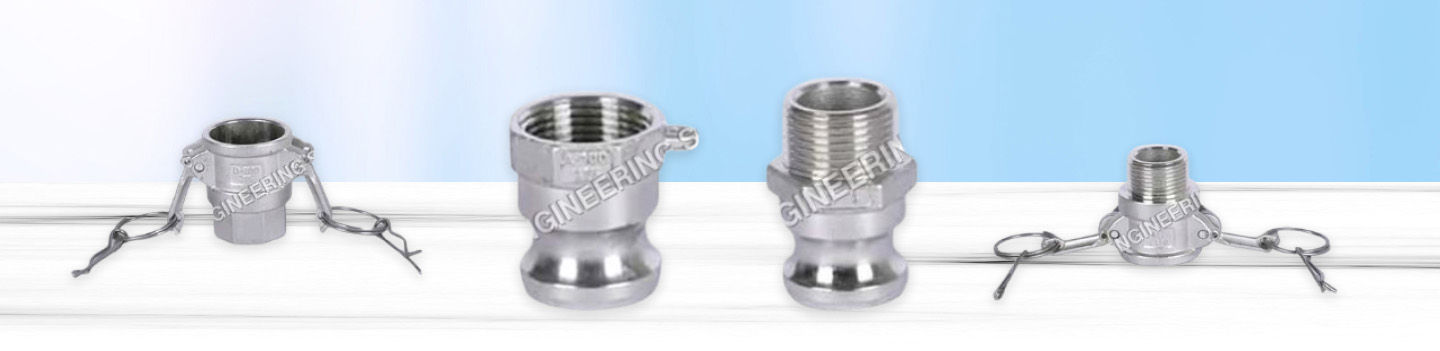
TYPE A Camlock Coupling
Price 250 INR/ Piece
TYPE A Camlock Coupling Specification
- Bore
- Full bore
- Max. Speed
- Not applicable (static connection)
- Torque
- Hand-tight only, no additional torque required
- Sealing
- Gasket/O-ring (NBR/EPDM/Viton)
- Connection
- Male adapter x Female NPT thread
- Head Code
- Hexagon
- Thread
- NPT / BSP (as per request)
- Material
- Stainless steel 304/316
- Structure
- Locking arms with adapter
- Size
- half inch to 4 inch
- Standard
- A-A-59326 (MIL-C-27487)
- Inner Diameter
- 1/2 to 4 inch
- Product Type
- STAINLESS STEEL
- Outer Diameter
- Varies by size (conforms to standard sizes)
- Weight
- 500 Grams (g)
- Color
- SILVER
- Application
- Quick connect and disconnect of hoses and pipelines in industrial, agricultural, and commercial settings
- Surface Treatment
- Polished
- Technique
- Precision casting
- Shape
- Round
- Temperature Range
- -20°C to 200°C (depends on gasket material)
- Usage
- Suitable for water, oil, chemical, and dry bulk handling
- Pressure Rating
- Up to 250 PSI (varies with size and material)
- End Connection
- Camlock coupling Type A (Male adapter)
TYPE A Camlock Coupling Trade Information
- Minimum Order Quantity
- 50 Number, Number, Number
- Supply Ability
- 10 Per Day
- Delivery Time
- Days
TYPE A Camlock Coupling About
| Material | SS 304 |
| Thread Size | HOSE TYPE |
| Usage/Application | WATER |
| Country of Origin | Made in India |
| Size/Diameter | 1 inch |
| Model Name/Number | CAMLOCK |
A Camlock coupling (also known as a Cam and Groove coupling) is a type of quick-connect coupling used to safely and efficiently connect hoses or pipes for the transfer of liquids or gases. The coupling features a set of cams that allow for easy and secure connection without the need for threading or tools. It is widely used in industries such as oil and gas, chemicals, food processing, agriculture, and construction.
Key Components of a Camlock Coupling:-
Male/Female Adapter: The coupling consists of two main parts:
-
The male adapter (often a fitting that connects to the hose or pipe) has grooves.
-
The female adapter (which is typically the coupling body) has a corresponding set of cam arms to lock the connection in place.
-
-
Cam Arms: The arms on the female side of the coupling are hinged and allow the user to quickly and easily engage or disengage the coupling by simply pulling back or pushing forward the cam arms.
-
Rubber Gasket: A rubber gasket or O-ring is often placed between the male and female components to create a leak-proof seal once the coupling is engaged.
-
To connect, the male adapter is inserted into the female adapter, and the cam arms are pushed into place (either manually or with a lever).
-
The cam arms lock onto the male adapter, holding the connection tightly in place.
-
To disconnect, the cam arms are pulled back, releasing the coupling.
-
Type A: Male camlock with a female thread.
-
Type B: Female camlock with a male thread.
-
Type C: Male camlock with a male thread.
-
Type D: Female camlock with a female thread.
-
Type E: Male camlock with a female BSP (British Standard Pipe) thread.
-
Type F: Female camlock with a male BSP thread.
-
Aluminum: Lightweight and corrosion-resistant, often used in general industrial applications.
-
Stainless Steel: Provides higher durability and corrosion resistance, suitable for use with chemicals, food-grade products, and in high-pressure environments.
-
Brass: Commonly used for water or low-pressure systems.
-
Plastic: Lightweight and corrosion-resistant, used in light-duty applications.
-
Agriculture: For irrigation and transferring fertilizers or pesticides.
-
Oil & Gas: To safely transfer crude oil, gas, or chemicals.
-
Chemical Industry: For handling hazardous chemicals or acids.
-
Food & Beverage: For transferring liquids such as juices, milk, or syrups in food processing.
-
Quick and Easy to Use: The coupling can be connected and disconnected without tools, making it very efficient.
-
Versatile: Camlock couplings come in a variety of sizes and materials to suit different applications.
-
Leak-Proof: Provides a secure, tight seal to prevent leaks and spills.
Precision-Engineered for Reliable Connections
Manufactured from premium 304 or 316 stainless steel, the TYPE A Camlock Coupling ensures compatibility with a broad spectrum of media. Its precision casting, polished surface, and full bore design facilitate smooth, unobstructed flow and effortless maintenance. Safety is enhanced with resilient sealing options, including NBR, EPDM, and Viton, catering to various industrial needs.
Wide-Ranging Application Versatility
This Camlock coupling is a versatile solution that streamlines hose and pipeline changes across multiple sectors. Whether handling water, oils, chemicals, or dry bulk, its rapid connect/disconnect mechanism saves time and reduces downtime, making it indispensable for distributors, manufacturers, service providers, and traders seeking efficiency in their operations.
User-Friendly Operation and Maintenance
Designed for easy installation, the coupling requires only hand-tight torque and no complex tools. Its hexagon head allows secure gripping, while the locking-arm design prevents accidental disconnections. Maintenance is minimal and straightforward, thanks to replaceable gaskets and robust stainless steel construction that withstands harsh industrial environments.
FAQ's of TYPE A Camlock Coupling:
Q: How do I install a TYPE A Camlock Coupling?
A: Simply insert the male adapter into the corresponding female camlock fitting, then close the locking arms by hand. No tools or additional torque are needed; the design ensures a secure, leak-proof connection when hand-tightened.Q: What factors affect the temperature and pressure limits of this coupling?
A: Temperature tolerance (from -20C to 200C) depends largely on the gasket material (NBR, EPDM, or Viton), while the pressure limit (up to 250 PSI) varies with the size and material of the coupling. Always confirm compatibility with your specific application requirements.Q: When should I choose stainless steel over other materials for my coupling?
A: Stainless steel 304/316 is recommended for environments where chemical resistance, strength, and long-term durability are essential-such as chemical processing, oil handling, or when dealing with corrosive substances.Q: Where can the TYPE A Camlock Coupling be used?
A: This coupling is suitable for use in industrial, agricultural, and commercial settings, including fluid transfer, tanker filling, and dry bulk handling, wherever quick hose or pipeline connections are needed.Q: What is the benefit of the quick connect/disconnect process with this product?
A: The Camlock design allows rapid and secure attachment or removal of hoses and pipelines, which minimizes downtime, boosts efficiency, and enhances workplace safety compared to traditional threaded fittings.Q: How do I maintain the gasket or O-ring in the coupling?
A: Inspect gaskets/O-rings regularly and replace with the correct type (NBR, EPDM, or Viton) as needed to maintain seal integrity. Routine inspection and replacement help prevent leaks and ensure reliable performance.Q: What standards does the TYPE A Camlock Coupling conform to?
A: These couplings are manufactured to comply with A-A-59326 (MIL-C-27487), ensuring standardized dimensions, interchangeability, and reliable performance in demanding industrial conditions.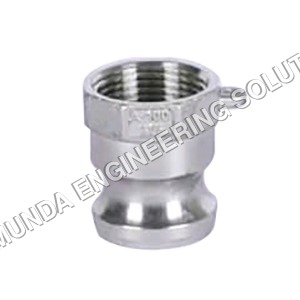
Tell us about your requirement

Price:
Quantity
Select Unit
- 50
- 100
- 200
- 250
- 500
- 1000+
Additional detail
Mobile number
Email

More Products in Camlock Coupling Category
Petro Equipment Aluminum Camlock Coupling
Price 1650 INR / Piece
Minimum Order Quantity : 50
Size : 3 inch
Material : Aluminum Alloy
Usage : Structure Pipe
Surface Treatment : Other, Anodized/Sandblasted
Ss304 Stainless Steel Camlock Coupling
Price 250 INR / Piece
Minimum Order Quantity : 50
Size : 1 inch
Material : Stainless Steel
Usage : Hydraulic Pipe
Surface Treatment : Other, Polished, AntiRust Coating
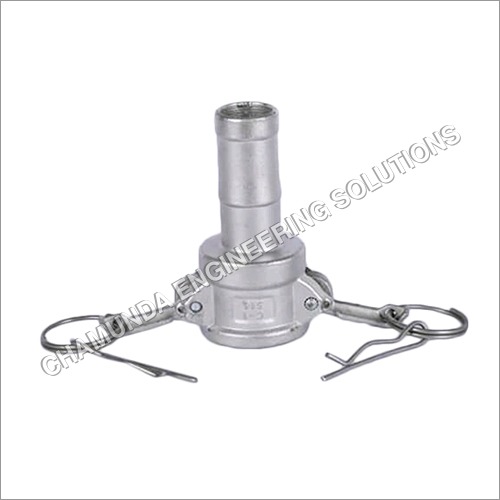
C Type Camlock Coupling 1/2"
Price 150.00 INR / Piece
Minimum Order Quantity : 1000
Size : Customized
Material : Stainless Steel
Usage : Industrial
Surface Treatment : chrome Plating
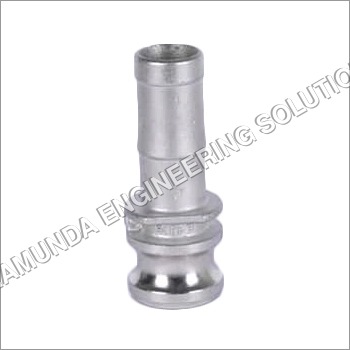
E Type Camlock Coupling
Price 220 INR / Piece
Minimum Order Quantity : 50
Size : 1" TO 6
Material : Aluminum, Aluminum Alloy
Usage : Industrial
Surface Treatment : Galvanized

CHAMUNDA ENGINEERING SOLUTIONS
GST : 24APYPB0504M1ZV

- A 9., Safal Sumel Business Park 9, Near Hanumanpura Brts Bus Stop, Dhudheswar Road,Ahmedabad - 380004, Gujarat, India
- Phone : 08045811855

- Mr Naresh Bhungaliya (Director)
- Mobile : 08045811855
-
 Send Inquiry
 Send Inquiry
|

Our Products
- Moisture Separator
- Camlock Coupling
- Knife Edge Gate Valve
- Pulp Valve
- Auto Drain Valve
- Roto Seal Coupling
- Quick Release Coupling
- Gauge Cock
- Brass Ball Valve
- Needle Valve
- Air Compressor Filter
- Industrial Valve
- Ball Valve
- Brass Gas And Ball Valve
- Air Compressor Auto Drain Valve
- Hydraulic Quick Coupler
- Aluminum Roto Seal Coupling
- Air Pre Filter
- SS Siphon Pipe
- Bimetallic Temperature Gauge
- Water And Oil Filter
- Cam Lock Coupling

CHAMUNDA ENGINEERING SOLUTIONS
All Rights Reserved.(Terms of Use)
Developed and Managed by Infocom Network Private Limited.
Developed and Managed by Infocom Network Private Limited.


